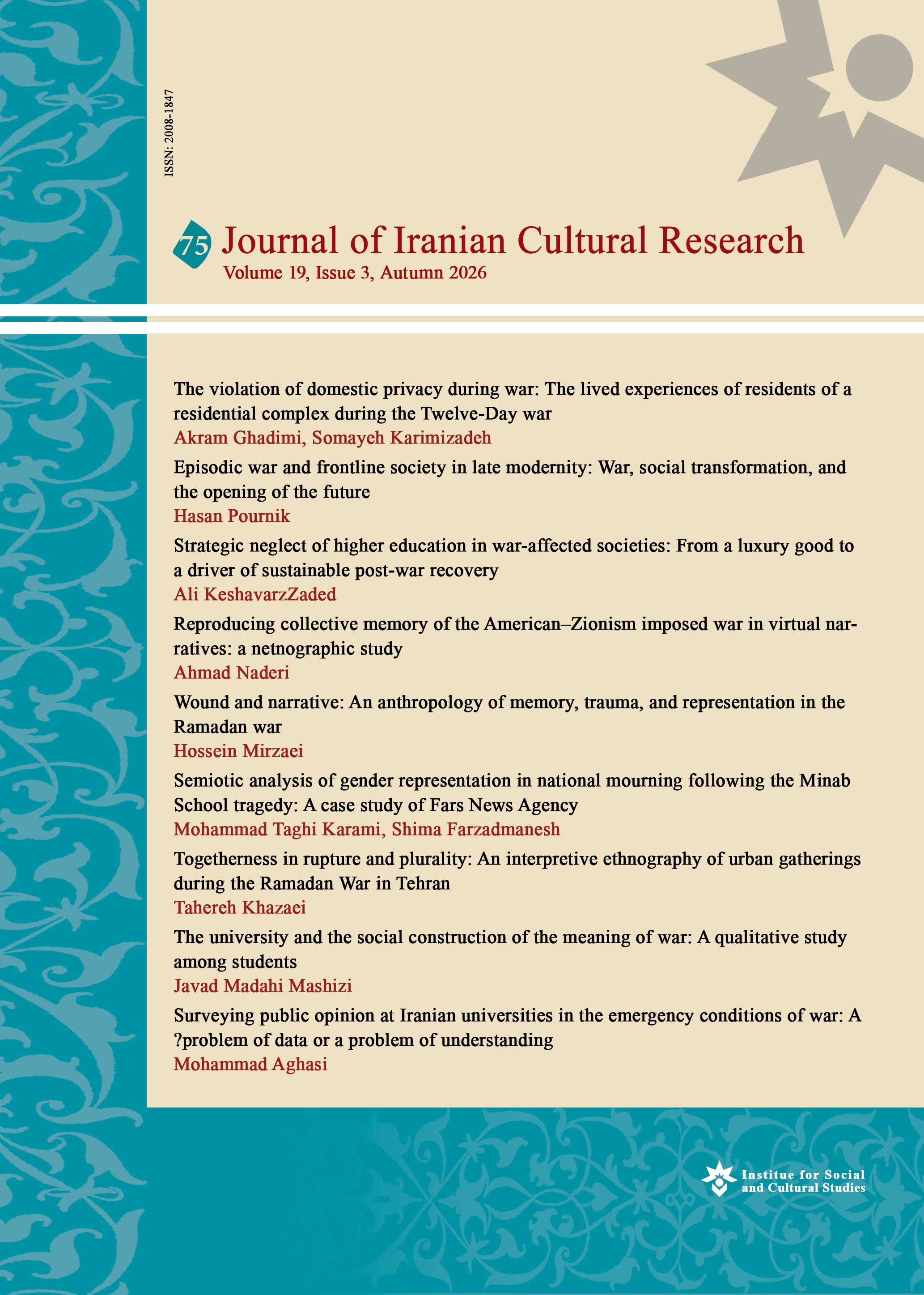
Journal of Iranian Cultural Research

Journal of Iranian Cultural Research

Journal of Iranian Cultural Research (JICR) is double blind peer reviewed quarterly journal, based in Institute for Social and Cultural Studies (ISCS) in Iran. JICR is interested in essays concerned with the Cultural studies and cultural sociology and aims to expand the recognition of culture and its evolution in Iran. With regard the cultural circulation in social science and epistemology, JICR tries to produce science and research in order to fill the current Shortcomings. The subjects of manuscript for consideration includes, but not limited to, cultural issues of Iran, cultures and rituals in Iran, culture and higher educations, culture and Iran’s development, cultural changes, process Mining and cultural future of Iran.

JICR is fully open access and full texts of published articles are available open access to the public through the journal’s website. Copy, share and distribute is free under the Creative Commons Attribution 4.0 International CC-BY 4.0 codes. The manuscript submission, refereeing and publication processing are free of charge.

Keywords Cloud

  • Culture
  • Identity
  • Iran
  • Representation
  • Grounded Theory
  • media
  • University
  • National Identity
  • Women
  • Lifestyle
  • Globalization
  • social networks
  • Semiotics
  • phenomenology
  • Religiosity
  • intercultural communication
  • Youth
  • Instagram
  • Discourse
  • Everyday Life
  • Social Media
  • student
  • Higher Education
  • Critical Discourse Analysis
  • leisure time
  • Power
  • students
  • Cultural capital
  • Family
  • Discourse Analysis
  • Internet
  • Reflexivity
  • Cyberspace
  • Tehran
  • computer games
  • social capital
  • Education
  • decoding
  • City
  • Television
  • Ethnicity
  • Life Style
  • Religion
  • Content analysis
  • Consumption
  • Social Identity
  • Communication
  • Ethnic Identity
  • individualism
  • Mass Media
  • Farabi
  • Hijab
  • Academic culture
  • semiology
  • islam
  • Cultural Identity
  • Cultural Policy
  • Celebrity
  • Pilgrimage
  • resistance
  • Iranian Cinema
  • Orientalism
  • Gender
  • Alienation
  • Cultural Semiotics
  • Paradigm
  • Narrative
  • cultural changes
  • Secularization
  • Encoding
  • Privacy
  • Popular Culture
  • political philosophy
  • TV
  • Materialism
  • Norm
  • Body Management
  • Sustainable Development
  • dialogue
  • Video Games
  • Ethnography
  • Social participation
  • Metaverse
  • virtual space
  • child
  • gamification
  • Social Tolerance
  • virtual tourism
  • Religious identity
  • typology
  • university culture
  • information technology
  • Peace
  • Popular Music
  • development
  • Social Trust
  • Islamic Republic of Iran
  • society
  • conjunctural analysis
  • University of Tehran
  • Qualitative Research
  • Youth Culture
  • Audience
  • Islamic Identity
  • Cinema
  • political culture
  • ancient Iran
  • Housing
  • Narration
  • ethnic
  • Consumerism
  • Educational System
  • Rituals
  • Kermanshah
  • Integration
  • Embodiment
  • Consumer Culture
  • Public Opinion
  • Media Literacy
  • gender stereotypes
  • Historical Sociology
  • schema
  • lived experience
  • Totality
  • Dual Globalization
  • Value
  • Muslims
  • Critical Thinking
  • trust
  • Communications
  • Relativism
  • COVID-19
  • Cultural Studies
  • Structure
  • Coronavirus
  • Modernity
  • music
  • stamps
  • Real Tourism
  • collectivism
  • Identity Elements
  • semiotic system
  • Professional Identity
  • Liquid Love
  • Social Science
  • Social isolation
  • Technology
  • Iranian Culture
  • Ardabil
  • Identity Crisis
  • social signs
  • Cultural Consumption
  • Comparative Study
  • Baloch
  • proverb
  • Religious Experience
  • Informal Culture
  • Imam Khomeini
  • Economic Sociology
  • inequality
  • Happiness
  • teaching cultural studies
  • Self
  • College Life Quality
  • Sense of place
  • Quality Of Life
  • Memory
  • Hegemony
  • Evaluation
  • Tourism
  • cultural criticism
  • Network
  • Digital Games
  • mediatization
  • Local Student
  • Individuality
  • Hybrid Identity
  • Meaning
  • interaction
  • public space
  • Middle East
  • Ethics
  • cultural analysis
  • Challenge
  • Non-local Student
  • Veil
  • virtual social networks
  • politics
  • Global Identity
  • Symbols
  • Generation
  • Organic Ideology
  • Textbooks
  • Challenges
  • Music Consumption
  • Cell phone
  • curriculum
  • Modernism
  • Utopia
  • Knowledge